About the Artist
Kat Tatz
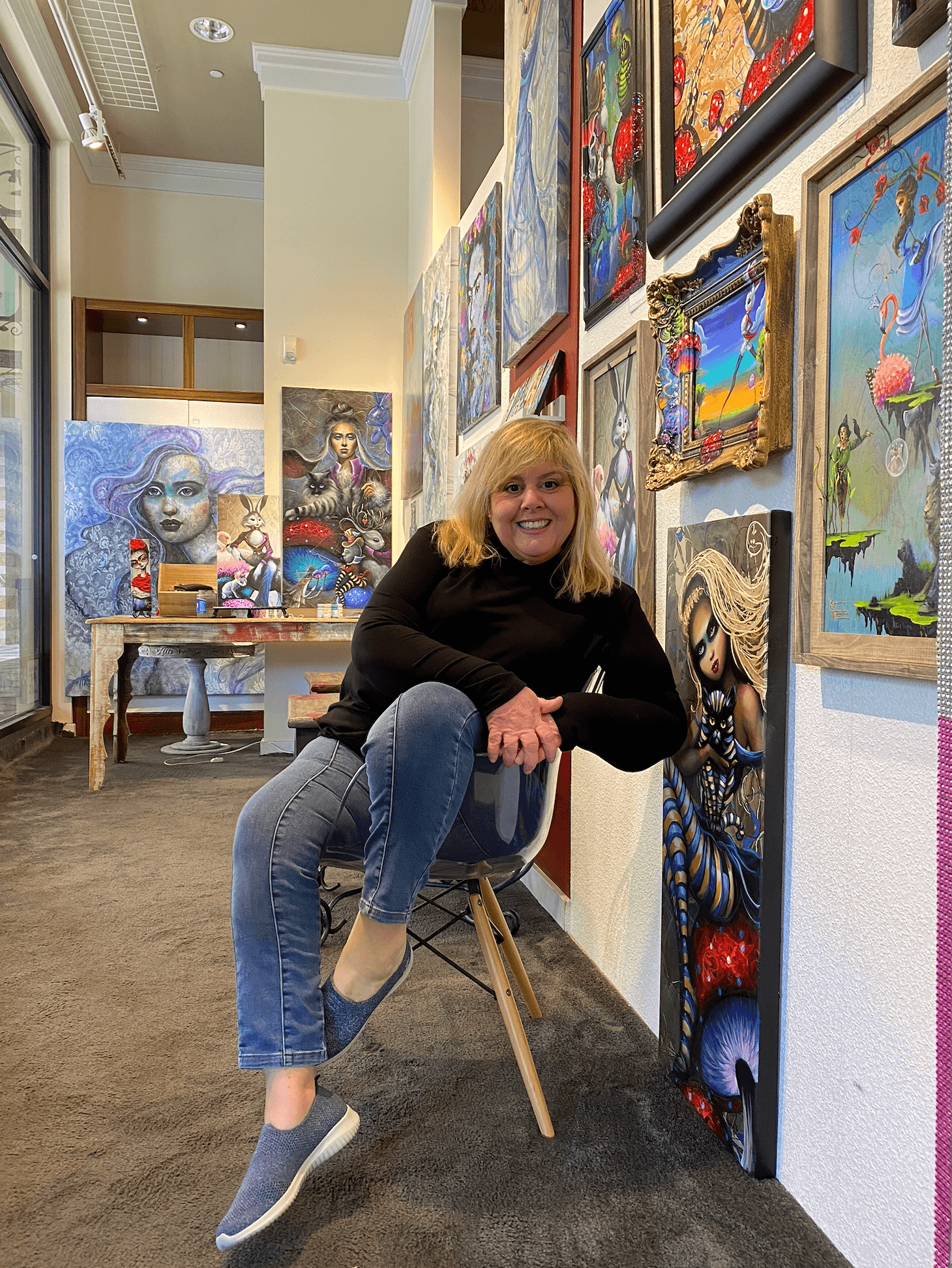
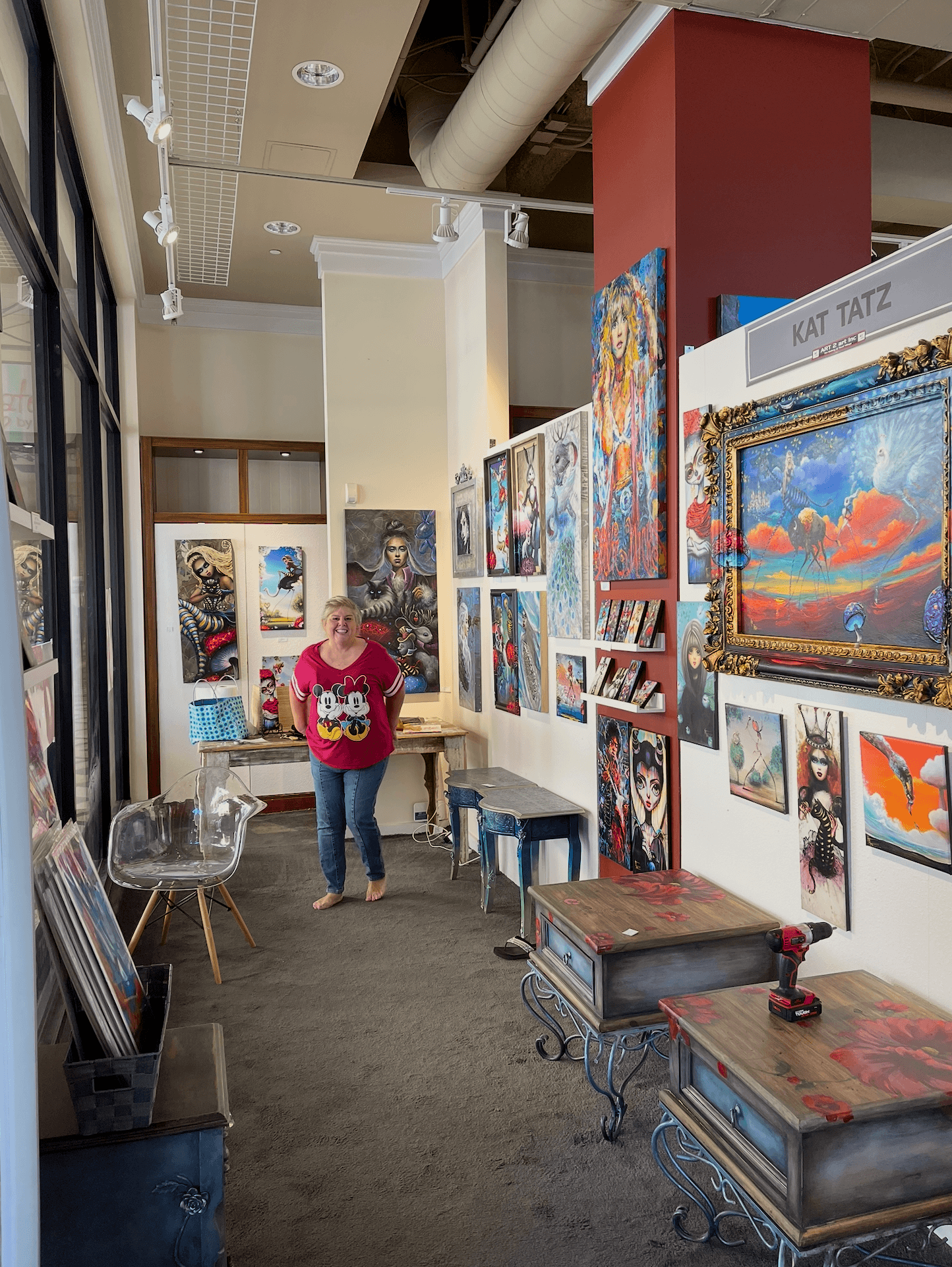
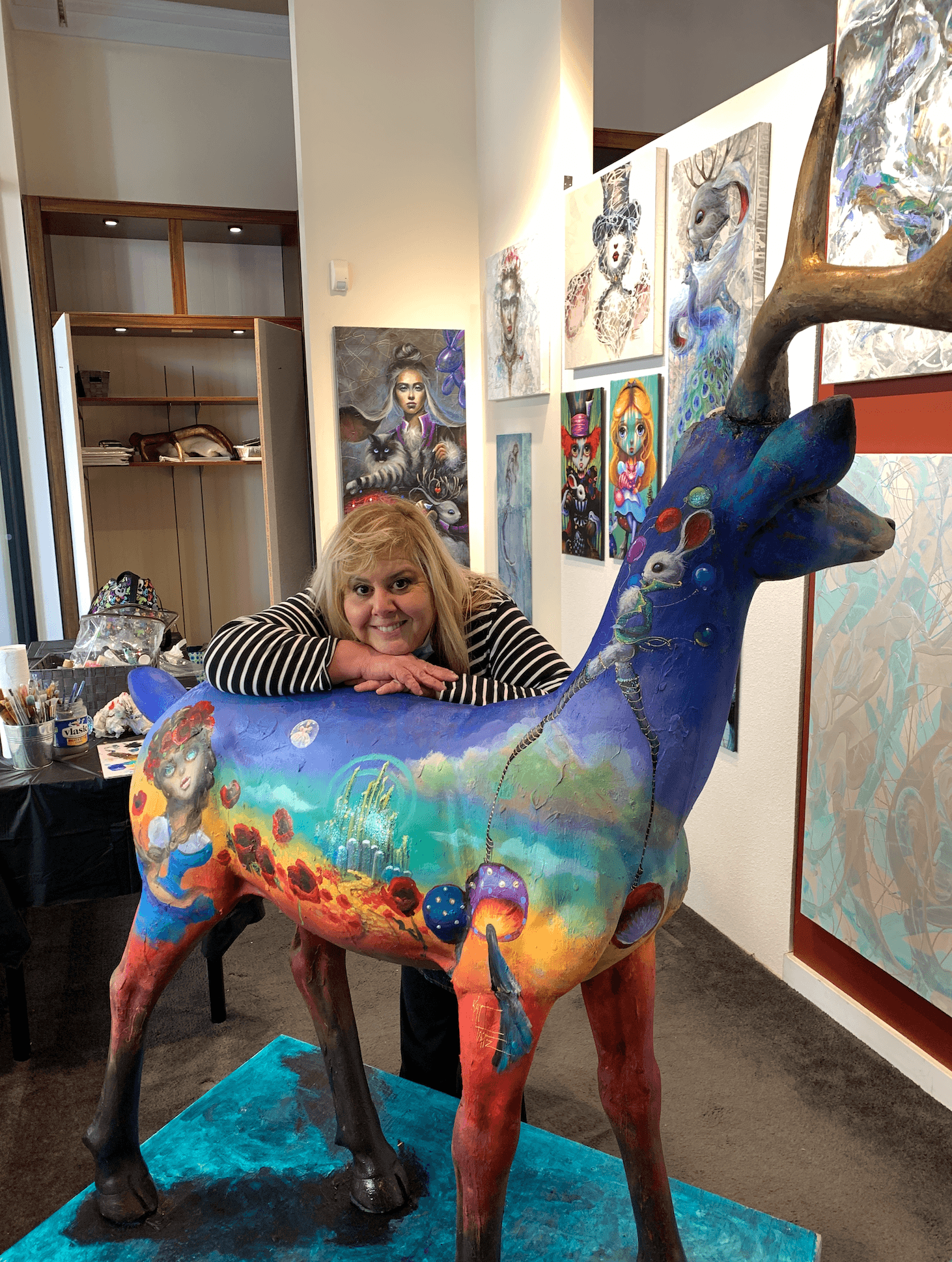
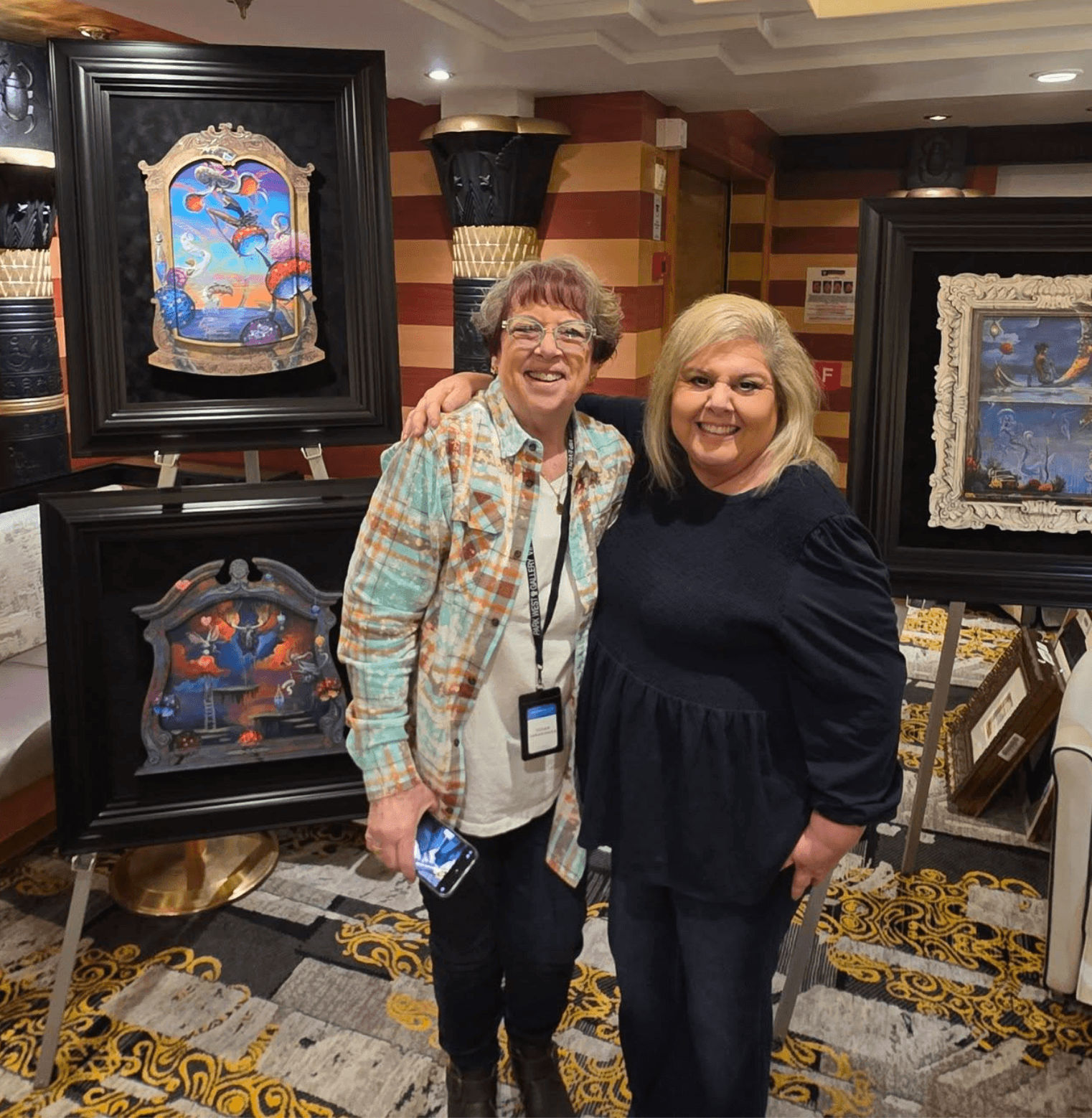
Kat Tatz was born into a family that spoke in color and form before she ever picked up a pencil of her own. Her father and grandfather were both painters and sculptors, and her mother built a career as an award-winning porcelain doll maker. One of Kat's earliest memories is sitting at the kitchen table while her father — who also worked as a sign maker and woodworker — showed a four-year-old how to map out the proportions of a human face. She grew up immersed in Las Vegas itself: the neon, the showroom glamour of Elvis, Frank Sinatra, and Wayne Newton, the towering headdresses of the classic Vegas showgirl. That sense of spectacle and transformation — of ordinary people becoming larger-than-life characters under stage lights — eventually worked its way into nearly everything she paints. Her path to painting full-time wasn't a straight line from art school to studio. In the early 1990s she struck up a conversation with a stranger outside an interior design shop, offered on the spot to paint a mural, and went home to gather photos of work she'd already done in her own house. She got the job. It became a habit: "When opportunities knock, I always answer," she says — sometimes the answer was no, but she kept showing up anyway. She studied formally at UNLV and continued developing her craft for decades afterward through workshops with visiting master painters, trips her husband gifted her over the years as encouragement to keep growing. What emerged is a body of work that's instantly recognizable: whimsical, richly surreal paintings built around transformation and identity, often staged inside ornate antique frames that Kat builds directly into the composition rather than adding afterward. Her world runs on modern-day Alice in Wonderland logic, seen through her own lens — not storybook illustration, but a stand-in for anyone caught mid-transformation, becoming who they're meant to be. A signature character turns up again and again across her paintings: an elegantly dressed White Rabbit, long-legged and more than a little rascally, forever mid-mischief with a drink in hand and a soft spot for mushrooms. Vegas-glam heroines and does share canvas space with reimagined portraits of cultural icons — Frida Kahlo, Stevie Nicks — rendered in Kat's own saturated, emotionally charged palette. She works across oil, acrylic, colored pencil, and sculptural mixed media, and by her own account rarely plans a painting down to the last detail, preferring to let each piece reveal what it's supposed to become as she works. Kat describes herself as an introvert working in an industry built on the spotlight, yet she shows up for openings and receptions warmly, again and again. That quiet persistence paid off in 2021, when she was chosen from nearly 500 entrants as the inaugural winner of Park West Gallery's "Made in Vegas" competition, earning representation with one of the largest art dealers in the world. Today her paintings hang inside Allegiant Stadium, the Grand Canal Shoppes at The Venetian, Tivoli Village, Mandalay Bay, and Park West's gallery inside the Forum Shops at Caesars Palace — a true Vegas original, still working out of her home studio, still letting the paintings tell her what they want to be.
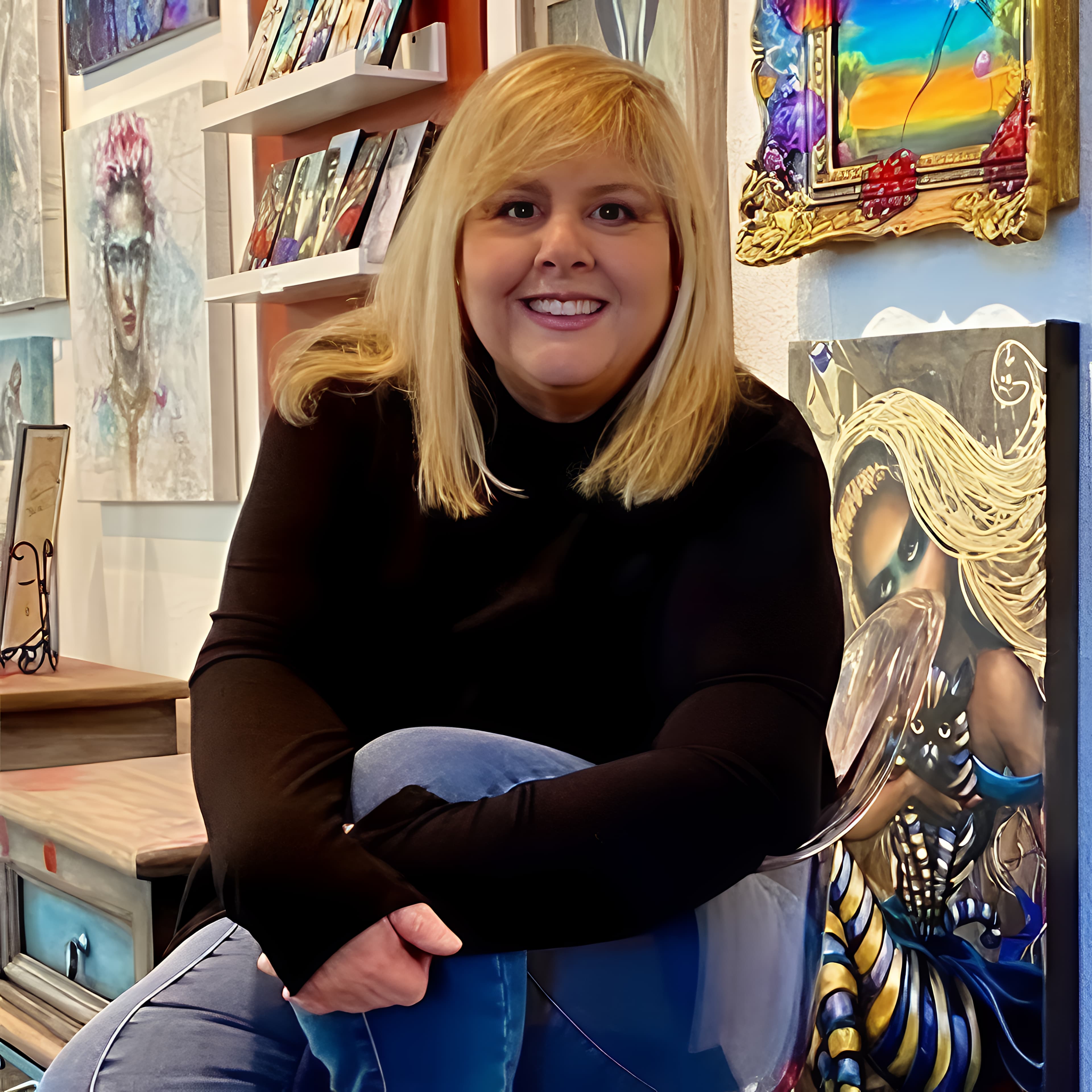
“Step into a Kat Tatz painting and you're never quite sure if you're falling down the rabbit hole or waking up from it. For more than 25 years, this Las Vegas original has been turning showgirls, cottontails, and cultural icons loose inside gilded antique frames — building a world where transformation is the whole point, and nothing is required to stay what it started out as.”
The Process
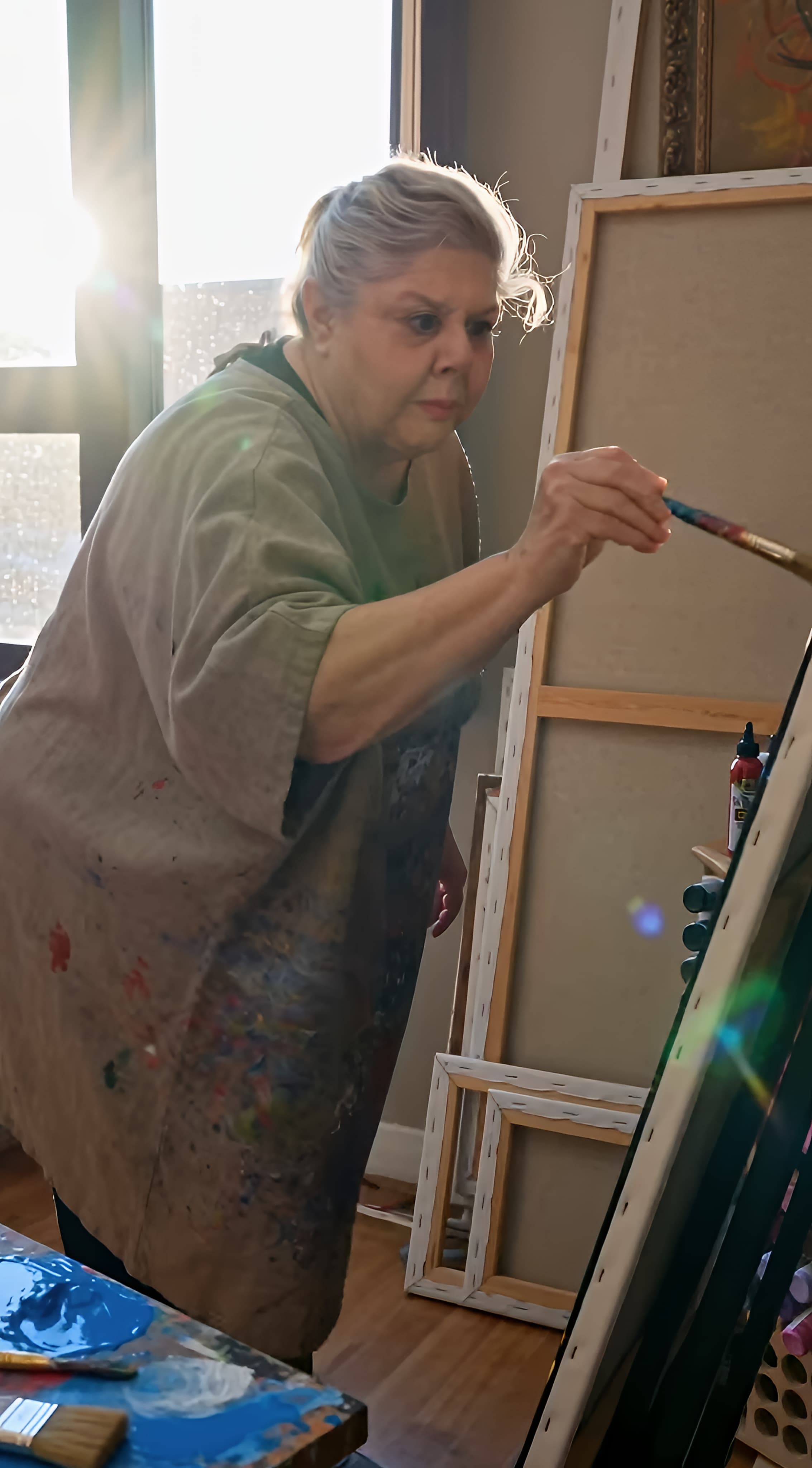
Inside the Studio
The Painting Process
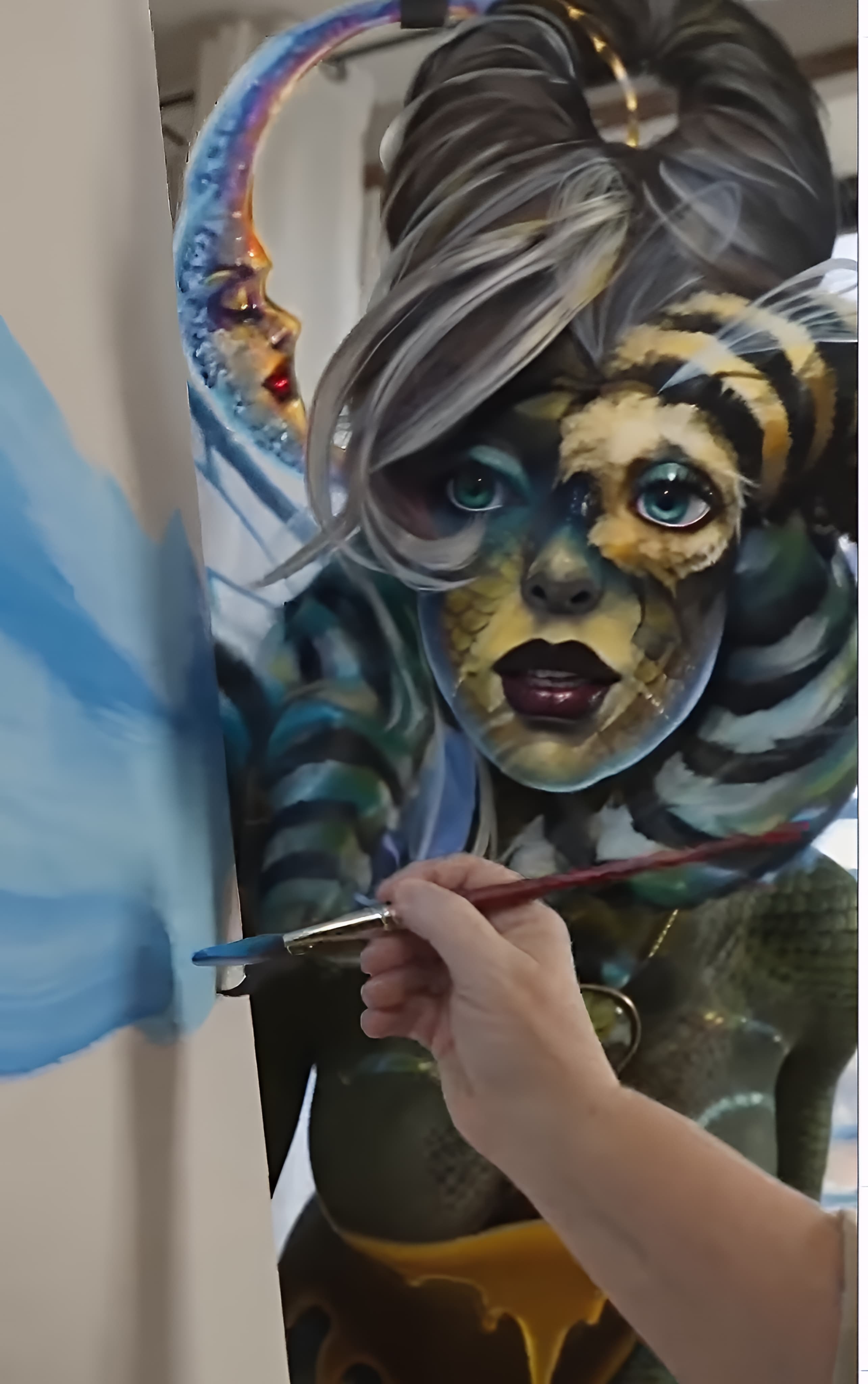
The Painting Process Kat rarely begins a painting with a fixed plan. She starts from a feeling, a character, or sometimes just a color, and lets the piece tell her what it wants to become as she works — a habit she credits with keeping her creatively restless after more than two decades in the studio. Faces come first; it's the discipline her father taught her at the kitchen table when she was four, and it still shows in the way she builds a portrait from the bone structure outward before layering in color and mood. Her toolkit spans oil, acrylic, and colored pencil, often within the same body of work, and her sculptural instincts show up in an unmistakable signature move: sourcing genuine antique and vintage frames and building the painting's narrative to fit inside them, so the frame stops being packaging and becomes part of the story the piece is telling. A workshop in New York with acclaimed realist Daniel E. Greene — whom she describes as working more like a scientist than an artist — sharpened her technical discipline. But the wildness of her imagery, and the rascally White Rabbit who keeps turning up in it, comes from somewhere no workshop teaches.